Quarterly Newsletter – July 2026
Four times a year the City of Castlegar publishes a newsletter that is distributed to all homes with our quarterly utility bills. Here’s what to know in Castlegar this quarter.
Be Prepared for Wildfire Season
All of us can take steps to reduce the risk and impact of wildfires. The goal of FireSmart BC is to support wildfire preparedness, prevention, and mitigation. FireSmart assessments are free and can be requested online between May and September from firesmartbc.ca. Please contact firesmart@castlegar.ca if you’d like to learn more about the City of Castlegar’s Wildfire Mitigation Program. Reducing our risk is a shared responsibility involving all homeowners, neighbourhood leaders, government, and participation from the private sector.
Property Tax Pre-Payment Plan
Helping you Prepare for the 2027 Property Tax Bill
The City can automatically withdraw ten equal pre-payments from August 15 to May 15 to apply towards next year’s property tax bill. Prepaid amounts, and any remaining balance will be displayed on your annual property tax bill next year. Here’s how you sign up:
- Complete application (all account holders must sign the application).
- Attach a void cheque where you want payments withdrawn.
- Apply before August 6 to start the plan by August 15.
Mail, drop off or email your application to finance@castlegar.ca. Download the application at castlegar.ca/propertytaxes
Stay Informed With Updates That Matter
Sign Up at castlegar.ca/subscribe
Voyent Alert!
Get real-time emergency notifications, personalized by location and delivery method.
City News & Notices
Receive timely updates on Council decisions and City updates—customized to your interests.
We Have a Problem. We Need Your Help.
Recycling and Garbage Found in Organics Carts is Increasing
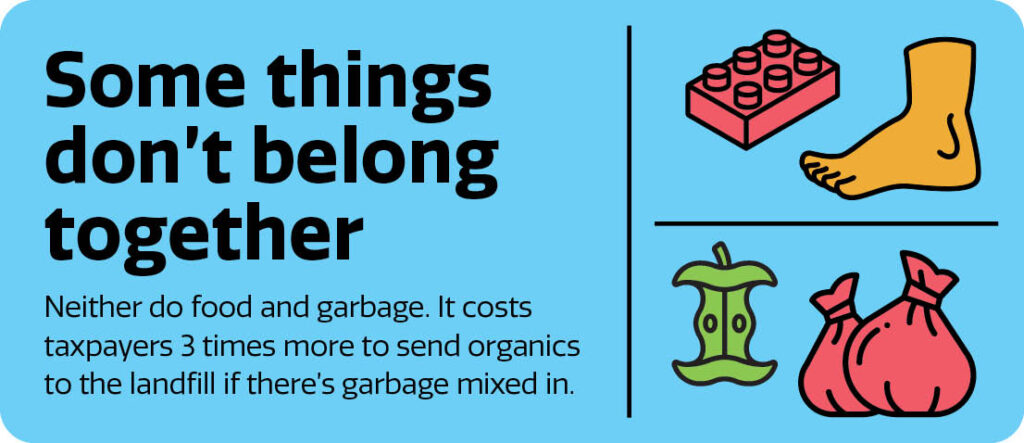
Castlegar is seeing garbage, recycling and unaccepted materials in organics carts. Unseparated waste is called contamination. When contamination levels are high, truckloads of organics can be rejected and sent to the landfill. This results in higher fees, which costs taxpayers money and can impact future tax rates.
What We’ve Found in the Organics That Should Not Be There
- Whole bags of garbage
- Food packaging such as plastic wrappers, plastic film, chip bags and plastic containers
- Construction waste (building demo materials)
- Recycling: glass, metal, and rigid plastics
- Pet waste and diapers
If you can’t eat it or if it isn’t made from a natural material, it doesn’t go in your organics cart.
We’re in This Together
Organics contaminated with recycling and garbage affects the whole community, and it’s something we can improve together. Sorting materials correctly helps keep organics out of the landfill, reduces costs, and makes the program more effective for everyone.
What Goes in Your Organics Cart
Food scraps Wooden utensils, food soiled paper towels, napkins, pizza boxes, and coffee filters Yard waste (branches less than 2” diameter)
Don’t Know Where Something Goes?
Visit castlegar.ca/curbside for more information about what’s accepted in your carts. Use the “What Goes Where” search tool on the website or use the Recycle Coach app available on Google Play or the App Store.
 Corporate Services